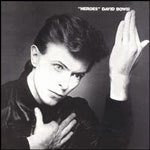
David Bowie Retrospective
by Benjamin Ray
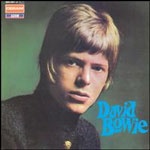



This may be hard to believe, but the truth is that David Bowie has never received much critical or commercial success.
Yes, he had several hits, some of them quite big ones like “Fame” and “Let’s Dance.” But the public has never really latched on to his changing visions and personas the way they have those of, say, Madonna. As such,
But his best work is at the heart of rock and pop, and he continues to be a big influence on musicians (and, in the 70s, was a big influence on musical trends). His work in the 1970s both infused and influenced glam rock, white soul and avant-garde pop/electronica; his work in the 80s was mostly pop, and in the 90s he attempted hard rock, a sort of techno-hybrid and even an alt-rock concept album.
This isn’t the work of someone with no direction, but rather the relentless experiments of an innovator and true musician, and this is why the Daily Vault will honor David Bowie as our May Artist Of The Month.
Bowie came back to commercial life with 1983’s Let’s Dance, which spawned three hits and a couple of stylish MTV videos, but the ensuing albums fell flat. He convened a band without his name called Tin Machine, which tried to be a straight-up alt-rock band but had neither the vision nor the songs to succeed. He often seemed to be imitating styles in the 90s, finally returning to a sound all his own on ...hours, Heathen and Reality.
It should also be noted that Bowie has long been a champion of other artists and often produced or wrote songs for those he felt needed a boost, chief among them Iggy Pop, Lou Reed and Mott the Hoople. He also is not shy about covering songs by other artists; indeed, many of his albums feature at least one cover tune.
From “Fame” to “Under Pressure,” from “Young Americans” to “Modern Love” the Vault will honor the former David Jones by covering every single studio album in his long career in a retrospective that will start Monday, May 5 and run seven days a week all the way through Friday, May 30. Many of these reviews will be appearing on the Vault for the first time.
Founded in January 1997, the Daily Vault has featured more than 5,300 reviews of more than 2,500 artists covering almost the entire musical spectrum, written by a volunteer staff from around the world. Previous Artist Of The Month retrospectives have spotlighted the work of artists from Tori Amos to Frank Zappa, including the Beatles, Dan Fogelberg,