Features
Go On Up: The Legacy of For Squirrels
by Pete Crigler
For Squirrels, out of Gainesville, Florida, were on the fast track to success in 1995. Their major-label debut, Example, was due for release on Sony 550 Music in October. The band had recorded the album that spring in the Bahamas with producer Nick Launay (PIL, Midnight Oil); frontman Jack Vigilitura had married his girlfriend in August and the band were touring the country getting ready for the album release. Then the unexpected happened and the band’s trajectory was changed forever.
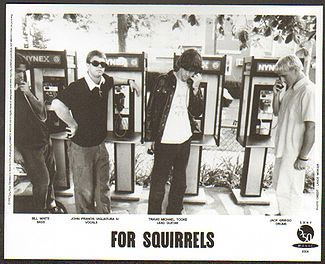 In the early morning of September 8, the band was traveling from New York, having played at CBGB and was going back home to Florida. En route in Georgia, a tire blew on the band’s van and it rolled three times. Vigilitura, bassist Bill White and tour manager Tim Bender were all killed. Guitarist Travis Tooke suffered minor injuries and drummer Jack Griego broke his arm amongst other injuries. A devastated band made their way back to Florida for burials and tribute. The album was released as scheduled with photography by Tim Bender and a single was scheduled to hit the radio in early ’96.
Now, something like this had tragically happened before. On April 19, 1992, the rhythm section of Georgia alternative band The Jody Grind was travelling in their van to Atlanta when they were struck head-on by a drunk driver in the wrong lane in Alabama. Drummer Rob Clayton, bassist Robert Hayes, and the band’s opening act, performance artist Deacon Lunchbox, were all killed instantly. The band’s second album had been out a week and the surviving members immediately called it a day.
With For Squirrels, they were building some buzz and once word of the tragedy got out, people from all over started doing what they could to help. A charity drive was initiated and musicians as diverse as Paula Abdul, All-4-One, Pearl Jam and White Zombie contributed signed items for auction and sent the band well-wishes. Around early ’96, the single “Mighty K.C.,” a haunting remembrance of Kurt Cobain, was being sent to radio stations and actually got some good traction, charting at number fifteen on the modern rock chart and hitting the lower rungs of the top 40 radio chart. The band hit the road with friend Andy Lord stepping in on bass and even went on MTV’s “120 Minutes” to talk about the accident and their future.
As they toured, crowds were receptive and the guys realized they could, and wanted the band to, carry on. But For Squirrels was no more; a new name would be chosen to represent the future. The Latin phrase Subrosa, meaning “under the rose” was picked to begin the band’s new chapter. Example ended up moving close to 100,000 copies, pretty damn good for a first-time alt rock band and as a result, Epic was on board for the follow-up. The band went up to Canada in the fall/winter of 1996 with Nick Launay behind the boards again to create a different kind of album.
What they emerged with in the spring of 1997 was Never Bet the Devil Your Head, an angry, heavy record dripping with sadness and mourning. This was the sound of three guys mourning the loss and hitting it with some thick, heavy devastation. Songs like “Aerial” and “Pretend,” the latter directly inspired by the loss sidle up alongside heavy songs like “World’s Greatest Lover” and “The Life Inside Me Killed this Song.” Even “Never the Best” takes a full-on punk vibe but everything here works and it’s clear that the band wasn’t trying to be commercial anymore. Just writing what they felt and playing how they knew the songs had to be played.
 When the album was released, the heavy, abrasive “Buzzard” was the first single and the video showed the band had been joined by a new guitarist to help round out the sound. Mike Amish, a friend from Florida was brought in as they hit the road again. The album didn’t sell well, though; sales figures weren’t obtained by press time but my estimate is less than 20,000 copies, which was low for ’90s alt rock. But the band persevered, even when faced with a never-ending tour with rising rock upstarts Creed. Doing at least two long tours with the band as their career ascended had to have been a bit crushing to Subrosa and then in early ’98, Griego departed.
Hooking up with friend Rusty Valentine, the band continued on with diminishing returns. Sometime in ’98, they returned to the studio to demo and work on new material. But the band were dropped by Sony the same year and were set adrift. Despite rumors on the burgeoning internet that something called Revlover would be coming around ’98 or ’99 on a new label, nothing more was heard from the band. Ultimately, they called it a day in 2001. Everyone went on to get regular jobs while some like Andy and Mike started new projects like Bears & Lions and papercranes. Travis took a long sabbatical and reemerged in 2007. He independently released a solo album, Artichoke and did some local shows for support. The album garnered good press but ostensibly brought up emotions as a lot of interviewers wanted to know about the accident.
That would be a common reoccurrence as the anniversaries ticked away. Subrosa did a reunion show around 2018 with all original members but there still remains to have no audio or video uploaded of any real significance. Travis formed a new band called Helixglow and released singles here and there and finally in 2025, they uploaded their debut album on Bandcamp with no publicity except for a few stray social media posts. The album is good and reminiscent of Subrosa more than For Squirrels.
On the 30th anniversary of the accident, we can see that those who were lost have left a lasting legacy. Jack V., Bill & Tim have never been forgotten and neither has the music they helped create. This band should be remembered for more than a tragic accident and the music they all made still sounds revelatory and amazing thirty years later.