Features
Just What We Needed
A Definitive Biography Of The Cars
by Jason Warburg
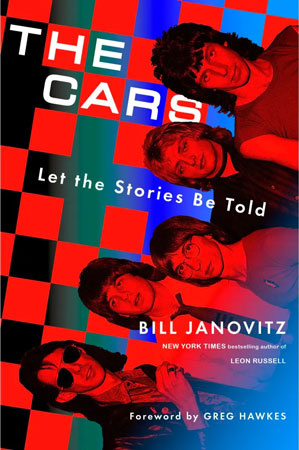
Authorized biographies can be problematic. Even when the writers supposedly have free rein, it often ends up feeling like compromises have been made to protect the ego(s) of the principal(s). Bill Janovitz’s recent, authorized examination of one of the most influential and iconic bands of the late ’70s New Wave movement, The Cars: Let The Stories Be Told (Da Capo, 2025), is both an exception to that rule, and exceptional in its own right.
 In addition to delivering a string of cutting-edge late-’70s radio hits that pushed the entire music scene forward into the 1980s, The Cars were a genuinely interesting group, a hodgepodge of sharply different personalities and personas—not to mention musical backgrounds—that collided to form something unique and special, only to spin apart after barely a decade together.
Janovitz captures all of the inherent drama in this arc in this meticulously researched book, which places the band firmly within the zeitgeist of the times and the context of the Boston scene from which it sprang. The personalities of the five principals: Ric Ocasek (rhythm guitar, co-lead vocals, songwriting), Ben Orr (bass, co-lead vocals), Greg Hawkes (keyboards), Elliot Easton (lead guitar) and David Robinson (drums) emerge in clear relief, as do the critical roles played by both early supporters like WBCN DJ Maxanne Sartori and producer Roy Thomas Baker, and later-era advisers like Elliot Roberts.
In no particular order, here are some of the key takeaways for this reader, who was lucky enough to catch The Cars on their first national tour in 1978:
-- “Troubled genius” is more than just a stereotype. Ocasek was a brilliant songwriter and also a mercurial, deeply insecure, and frequently inscrutable figure. By the end of The Cars, the agreeable, mostly ego-less Hawkes was the only bandmember still on friendly terms with him. It didn’t help that the band’s management increasingly encouraged Ocasek to assume full control, treating the rest of the band as sidemen. There is also the familiar suggestion of genius arriving hand in hand with mental illness. Bipolar disorder? Narcissism? Both possibilities are mentioned by people close to Ocasek, but no clear answer emerges. What is known is that Ric Ocasek was difficult and complicated and engaged in deeply hurtful behavior toward even those closest to him.
-- Elliot Easton might be the most underappreciated guitarist of his era. Every one of his solos on those immortal radio singles was meticulously composed, and it shows. Go back and listen, like I did; each one is a little masterpiece fusing early rock idioms with modern sensibilities. Rather than celebrating one of the band’s clearest strengths, Ocasek rains one punishment after another on the passionate and occasionally ornery Easton, to the point where he insisted that the Cars’ 2011 reunion album Move Like This forego guitar solos entirely.
-- Ben Orr is a genuinely tragic figure. The Cars grew out of the friendship and partnership between Ocasek and Orr, who had been an acoustic duo and then co-lead vocalists of a series of prior groups. The original concept for The Cars was to have Orr sing all the lead vocals. As the group moved quickly up the ladder of fame and money, though, the friendship at the heart of the band frayed, with Orr receiving fewer and fewer lead vocals and feeling sidelined in a band he had co-founded. The fact that Orr sang the band’s biggest hit “Drive” late in their run only seemed to cement the group’s end and send Orr deeper into the alcoholism that likely contributed to his early death in 2000.
-- David Robinson is a larger-than-life rock and roll character. The Cars’ drummer came to them from the backing band of one of Ocasek’s favorite performers, Jonathan Richman. Robinson’s passion for design led him to shepherd the band’s visual image for decades, at times pitting him against Ocasek’s machinations to control the group’s public face. Since the band ended, he has explored various forms of art (painting and jewelry, for two), opened a gallery, renovated a series of houses, and enjoyed the company of a series of lady friends.
-- Greg Hawkes was in many ways the nucleus of the band. The steady, amiable, and very talented Hawkes emerges as the stable center around which the other, more volatile personalities revolved. An innovative keyboardist and arranger and the only band member ever to receive a co-writing credit, he managed to stay close to Ocasek while still being on good terms with all the others. After The Cars, he taught himself the ukelele, played in numerous bands, and penned the introduction to this book.
-- Managers can be problematic. The group dumped their early-days manager after concluding he was great at managing a local nightclub band but underequipped to manage a national act. Then his replacement, the high-powered Roberts, encouraged all of Ocasek’s worst instincts and accelerated the disintegration of the band.
-- Boston has a great music scene. The most enlightening thing this reader learned—pardon my ignorance—is just how vibrant the Boston music scene has long been. Sure, most rock fans are aware it’s the hometown of Aerosmith and the J. Geils Band and (duh) Boston, but the scene as portrayed here also included Suicide, Pixies, Jonathan Richman and dozens of other notable names, with The Cars’ home studio Synchro Sound serving as a sort of clubhouse / incubator for many of them during the 1980s.
Janovitz tells The Cars’ story in a voice that’s honest, engaging, and intrigued by all of the same details and insights that most fans will be. The Cars: Let The Stories Be Told delivers a fascinating road trip through an era that transformed music and the lives of all of the principals in this tale, and stands, for now, as the definitive biography of one of the New Wave era’s most influential bands.