Features
Mark Doyon: The Daily Vault Interview
by Jason Warburg
It’s funny how things sneak up on you. For instance: Mark Doyon and I have been talking for 22 years. Not a single continuous two-decade-plus conversation, mind you—but not not that, either.
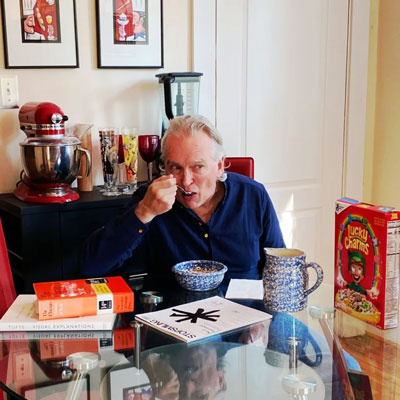 Since I first discovered a copy of Eponymous, Mark’s debut album as Arms Of Kismet, in my mailbox, we’ve been chatting off and on about all things creative and otherwise—songs, stories, movies, family, art and commerce, and that painfully familiar topic for artists in this modern age: “the humility of limitations.”
Our conversations have sometimes been grounded in the practical: through his imprint Wampus Multimedia, Mark published my first novel Believe In Me in e-book form in 2011. But more often our conversations have veered into more philosophical concerns. Why do we do what we do? What is the purpose? What is it that we’re chasing after with our creative endeavors?
When we met in 2004, Mark was the author of a book of short stories (Bonneville Stories), a single album by Arms Of Kismet, and seven by his previous band Wampeters. Over the course of said conversations, Mark has delivered four more albums as Arms Of Kismet, an album and two EPs in his alter ego of Waterslide, and a witty, thoughtful, and deeply human debut novel, Deep Fried.
Like his stories, Mark’s music concerns itself with what it’s like to be human: the mystery, the confusion, the tragedy and comedy, the hand of fate and the winking eye of the universe. (If you expected a writer who names Kurt Vonnegut and Ray Davies as two of his most essential influences to write a lot of songs about cars and girls, well, sorry to disappoint.)
Just lately, Mr. Doyon has completed a labor of love, remastering all seven original Wampeters albums and issuing them in a beautiful slip-cased set, alongside a new two-song single of previously unreleased Wampeters tunes. Well Wishes is a compendium that nearly defies reviewing in its sheer girth and scope (though I haven’t waved the white flag yet…). It’s a collection that Mark has described as encompassing “the wild, woolly trip from young adulthood to middle age.”
Well Wishes further served as the genesis and jumping-off point for the latest round in this ongoing conversation—this time on the record—a dialogue that covers topics from grade-school tribalism to the value of authenticity, before inevitably concluding with a paraphrase of one of Mark’s favorite sign-offs: “Onward!”
THE DAILY VAULT: I’m looking forward to talking about Wampeters, but I want to start earlier than that. When did you first realize that you loved to create, or wanted to create, or needed to create, whether we’re talking about music, or writing, or both? Please describe that moment.
MARK DOYON: I’m sure the moment predates my memories. From the time I was four or five, I was certainly daydreaming to keep myself entertained. And I had a trio of imaginary friends well before then. So, I probably didn’t realize I loved to create as much as I made stuff up to avoid getting bored. From the time I could look around and have a thought, I was playing around with twists and tweaks of what I saw.
I remember getting my first cassette recorder when I was eight, and whipping up little radio plays—parodies of Top 40 songs and TV shows. It was really all about making my brothers and friends laugh. What else was there?
When did you write your first song, and what was it about? How did that reflect back on what was happening in your life at that time?
I was subbing lyrics into AM-radio pop songs and ad jingles in the third or fourth grade. Even though those weren’t “songs,” they were my gateway into songwriting where I learned to string words and ideas together, and to tell a quick story from beginning to end. I would record songs off the radio and sing my own words over the top for whoever was around.
Naturally, this made me think about writing “real” songs someday. I took guitar lessons, which led to my coming up with novelty songs followed by travelogues of teen romance and other diary-styled tunes. I wrote a few things in high school that weren’t entirely embarrassing, and took that as evidence I was a songwriter. In college I wrote some acceptable things, which led to more evolved stuff by my early twenties. When did you write your first story, and what was it about? How did that reflect back on what was happening in your life at that time?
My brother and I, who shared a bedroom with bunk beds as kids, would make up stories after lights-out about fictional characters based on kids in our neighborhood. These stories were wildly speculative and lengthy, as we were trying on a nightly basis to shock and out-do each other. I got used to making stuff up on the spot, and carried that practice with me to college.
My early stories were about angsty schoolkids and musicians in punk bands and other juvenile wiseacres and delinquents. By the time I left college I was turning out a lot of short stories, as well as songs.
How many siblings, and where are you in birth order?
Oldest of three boys. My mother had her hands full. We were mostly into Dad things like sports and lawn maintenance. Sorry, Mom, we’ve been outside building a fort in the woods and taking bike jumps off a plywood ramp and are covered in dirt and scratches.
As creative folk graduate from childhood into adulthood, we often experience a tension between art and commerce. Please talk about how that tension manifested in your life and the choices you made as a young adult.
Art can be a calling or a passion or a mission. It can be hard to pursue in the “real” world. There is a wishful equivalency in our culture between getting paid to do a job, which isn’t necessarily what we would choose to do if we weren’t getting paid, and getting paid to pursue a calling or a passion or a mission. A job satisfies the needs of an employer and pays the rent, while art promises a more esoteric reward.
As a young adult I understood that, and didn’t love it, but I and never expected art to pay the rent. What frustrated me was seeing my time and energy siphoned away by a job, and having to find an alternate source of time and energy in order to make art.
In my twenties, I had a growing family and a job to match. I made records and wrote stories on evenings and weekends, burning the candle at both ends, which was exhausting for a long time. I learned a lot from that, but mostly I learned the humility of limitations. I also learned that failing to resolve conflicts between making money and making art can be the quickest way to lose your mind.
“The humility of limitations.” Oh, I feel that… (laughter) What is the origin story of Wampeters? What were your initial goals as a band, and how did that play out in real life?
After years of writing songs and playing in bands, especially one called The Ohms, I decided to make an album. I was newly married with a daughter on the way, and setting a creative goal helped to ground me. I figured I would record it solo in our apartment in Boston, which was a novel way to make an album back then.
I dubbed the project Wampeters (Vonnegut reference) and finished the record (Screen Test) within the year. I then upgraded my studio with a loan from my parents, a seminal assist, and got cracking on a follow-up. Our son was born the next year and we relocated to Virginia to be closer to our families. Soon after that, I wrapped up my second attempt (Folk Medicine).
Armed with these fledgling records, I called my old bandmates from The Ohms, Eamon Loftus and Scott Goodrick, to see what they thought of all this. Suddenly we were a full-fledged band making a full-fledged-band album in the basement of a townhouse. Heady stuff. (laughter)
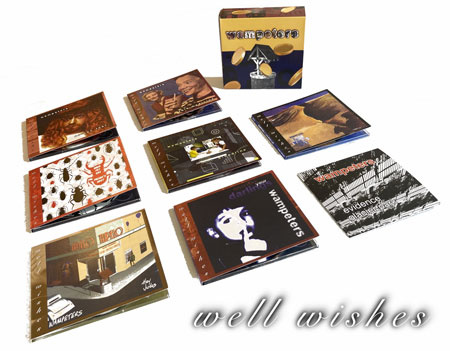 The earliest of the recordings collected on Well Wishes were made (gulp) 40 years ago. What sounds different to you about them now, versus when they were made? Can you still see yourself in the person who wrote and recorded those songs?
That person is an innocent version of me that still lives inside. I worry about him a little bit, but take heart in knowing nothing can change for him anymore. It can only change for me.
When I hear that first album, I still see the room, the stool, my guitar, the posters on the walls, all of it.
When I toured (as Arms of Kismet) in 2004, I closed the sets with a more aggressive version of “Riverboat Dream.” It was like time travel—just me and me, thinking it through, noting the static nature of certain things.
What are your favorite songs from this collection of them, and why?
Songs are like our children, and we don’t have favorite children, right? They’re all my favorites. Or each song was my favorite at the time I was working on it. I’m more interested in other people’s favorites, really, as it says something about relatability. I know which songs get streamed most, so maybe those are people’s favorites? I know which ones people ask about, so maybe those are the most interesting?
I try to do my best on any song, so I would say my favorites are the ones that affect people the most. I only know which ones those are when people tell me.
Even if I had personal favorites, they would change with my mood and whatever else is going on at the time.
A listener can check out any of the albums, or any of the songs, and find their own favorites. I always hope for that.
A totally fair response! Let’s try a different way into that period. What are your favorite memories of the Wampeters era, in terms of songwriting, recording, performing?
Eamon and I came up with most of Pagan’s Nest together, which was fun. It was the first full-band album we made, and I have a soft spot for those songs. We didn’t have any idea how we were going to sound when we started making it. It was an “anything is possible” kind of feeling. Very adventurous.
I also enjoyed making Murder Your Darlings, which reflected our growing proficiency as a live band, and signaled the maturation and closure of Wampeters as an active enterprise. You can hear the solidarity on that record. I always loved the sound of it.
Each album in the box has its own concept and character. No two were made the same way. Well Wishes maps a far-ranging narrative—young adulthood to middle age. It’s a lot, as they say.
What, in your mind, are some of the key points in the far-ranging narrative of Well Wishes? There’s clearly a thread about the absurdities inherent in suburban life in America in the late 20th century, but what sticks out in your memories of what you were trying to get across with the songs you wrote for Wampeters?
At ground level it’s about fighting to be who you are in the face of a world pushing for you to be like everybody else. (See Davies, Ray & Dave.)
The bird’s-eye view is of how it plays in society. Grade school, with its strict rules and tribalism, was about training the labor force of the future. Teach the kids enough to function profitably (reading, simple math, sanitized history), but not to challenge the status quo.
It’s dangerous, after all, when young people think for themselves about anything important.
The first two albums are a sort of playful social critique. Then the focus grows increasingly personal—especially around the struggle for authenticity and the price people pay for going against the grain or for not doing so.
I don’t know what percentage of Wampeters songs are about fast cars or puppy love, but it might be relatively low. (laughter)
Yeah, I must have missed those! I think your observation about the price people pay for either going against the grain, or not doing so, is on point. It often feels like audiences simultaneously demand authenticity and punish non-conformity. Which suggests the optimal path for artists is simply to be yourself, and let go of whatever happens after that.
Agreed. It’s simple—you can only be you. Some artists think they need more than that—money, fame, adulation. Yet those things have nothing to do with authenticity. They have nothing to do with art.
The Well Wishes set includes a new Wampeters single with two tracks (“Evidence” and “Glacier Park”) that you recorded solo, just as you did on the early records. In your mind, what makes these Wampeters songs?
Oh, they're Wampeters songs—“produced” in 2025, sure, but recorded in the late ’90s as demos for Murder Your Darlings. Like a bunch of other songs, they were in the mix for inclusion, but for some reason—maybe how they worked as band songs—we didn’t use them. We did work up a band version of “Glacier Park,” but didn’t finish it. “Evidence” just didn’t quite fit on the album.
I’m glad they’re out there now, though, because a tree that falls in the forest with nobody around... well, you know. But I always figured they’d see the light of day sometime.
What do you hope the audience takes from Well Wishes?
Thinking for yourself, really. Self-awareness, empowerment.
Or just: “You decide.” There is a sketch hanging in my house of a guy holding a big cardboard box on his head. The box reads, “A box filled with things everyone thinks you should have done.” Next to the box it says, “This only weighs a lot if you’ve forgotten to do the stuff you wanted to do all along.”
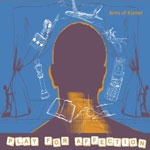
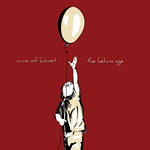
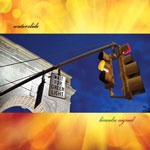
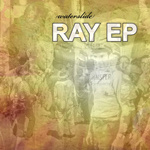
Since Wampeters ended, you’ve recorded mostly under the moniker Arms Of Kismet (and occasionally as Waterslide), mostly on your own, but with numerous guest appearances by members of Wampeters. What prompted the evolution in musical identity from Wampeters to Arms Of Kismet, and the creation of your other musical alter ego Waterslide?
Wampeters made a lot of music and a decade is a long time when you’re young. Murder Your Darlings was a natural conclusion. We were ready to branch out and do some different things.
Now, with Arms Of Kismet, I make albums about dreams and magical thinking. With Waterslide, I write narratives, almost like novels, and tell them through the eyes of characters (rather than through my own).
Over the past three decades you’ve written many songs, and also many stories. How do your songs inform your stories, and vice versa? What sort of “bleed” is there between the two forms for you?
People sometimes ask why I don’t “choose one” over the other. But they’re the same to me. The premise of Bonneville Stories—that the events of life seem random yet orchestrated—later became the basis of Arms Of Kismet, for instance.
Making records takes more “physical” strength than writing a book does, at least for me. Because of that, I wonder if maybe I’ll tilt more toward the books as I get older. I love working in both areas, letting them inform each other in unexpected ways, and hope to continue for a long time.
 The different monikers you’ve employed on different projects reflect different approaches—but all of the words and melodies flow from your imagination and are shaped by your unique perspective and experiences. Whether intentionally or not, do you feel like the songs we write and the stories we tell are in some sense inevitably a form of memoir?
I might not call it “memoir,” but it’s definitely us. And it’s not possible for us to create something that isn’t us. So, whether or not we intend it as personal reflection or exploration, we choose subject matter that resonates in us and compels us.
I would suggest (and I know some people would disagree) that if creative work isn’t revelatory of its maker or of the world at large, it isn’t art. Maybe it’s an invention or a construct or whatever—but that’s different. Why? Because art is built on truth, courage, discovery—not just working hard or being clever or having skills. Art has stakes. And those stakes are personal.
Which brings me to a question I’ve been looking forward to asking: What is art for?
I don’t know, whatever you like? I think it can be for communication, expression, exploration, discovery, argument, persuasion, enrichment, caretaking, mischief, therapy, or activism. It can also be for entertainment or escape.
It is a tool for elevating and transforming the individual, society, and culture.
Pete Townshend wrote: “In your hand you hold your only friend / Never spend your guitar or your pen.”
If not for guitars and pens, I don’t know what I would have done as a young person. Art was the language that spoke to and for me.
Indeed. A while back you suggested to me that, for creative types, there is the story and also “The Story”—the overarching narrative that we are all crafting through our work over the course of a lifetime. What is The Story looking like for Mark Doyon these days?
Well, it’s starting to look pretty long. (laughter) But it’s still going, still growing. Each “chapter” is a surprise. The work is its own message and explanation, so my role is just to bring it along. When I start tinkering with a new record or book, it’s as new to me as it would be to anybody. I’m finding my way through it. I don’t know if it will end happily or not. I don’t know what it’s saying or why.
When I think of The Story, I think of Vonnegut’s novel Bluebeard. The protagonist is a painter. He has a “potato barn” on his property where he is painting a huge mural that depicts his memories and impressions. The mural is a narrative metaphor for his life and work. It is The Story.  When I released Well Wishes last year, I was contextualizing, through remastering and redesign, that formative period of making records. I was finalizing that part of the mural, of The Story. I’m not going to reissue that material ever again, and I’m not going to revisit it, either. It is “fixed” (at least my part of it) in time and space.
Now on to the next.
Yes! Now: what question have you always wished someone would ask you about your work? And what’s the answer?
I don’t think I’ve ever been asked why I do it.
When you’re young, you just want to express yourself. You want to be heard. You see the “adult” world as no fitting destiny for you. As you grow into yourself, you develop a voice. You think about communicating something useful, maybe affecting people in some way. You realize nothing you do, no matter how important or urgent it might be, can be more intrinsic to your reason for being than this thing.
When I was in my teens, I stumbled across a book called The Way Of A Pilgrim. It talked about “praying without ceasing,” a sort of meditative activity—not religious, but spiritual. Introspective. Every day, every hour, every moment.
Then I knew why I was doing it.
Fascinating. Several creative folks I’ve interviewed over the past few years have independently described their mission as some variation of “chasing transcendence.” You didn’t use either of those words, and yet it feels like that’s what we’re talking about here, that or a similar idea.
In the ballpark, I imagine. A favorite song, “Chestnut Mare” by The Byrds, is about this subject: “I’m going to catch that horse if I can / and when I do I’ll give her my brand / and we’ll be friends for life / she’ll be just like a wife / I’m going to catch that horse if I can." The “horse” is that transcendent prize, always slightly out of reach. The Wampeters song “One (Fine) Day” is a refraction of that idea. And so the “chase” continues.